The Rise of Slow Travel: Why People Are Tired of Seeing Everything
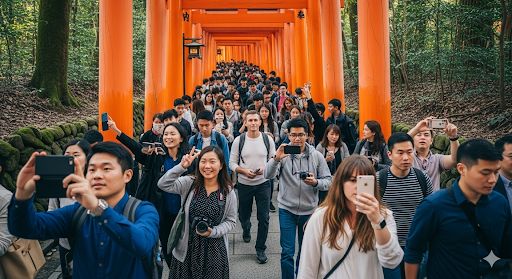
Have you ever felt like you need more time after a vacation? You're not alone. Most of us rush to try & see everything on our itinerary before the trip ends.
This fast pace of travel can leave us feeling exhausted & overwhelmed. We often choose to spend 7 minutes at a spot for a photo, because “a pic or it didn't happen” and often forget to really learn or connect with the place we're visiting.
Slow Travel on the other hand, is a new way to travel where you give more importance to how you're feeling while visiting a place rather than just doing the “cool things on a list because you need a picture.”
By experiencing a place slowly, intentionally & peacefully, you truly get to discover it. You become a part of the streets, culture, a routine & don't just visit a place as a tourist. Slow Travel means choosing curiosity over a travel checklist.
What Slow Travel Truly Teaches You
- Vacations need to be restorative, not a race to check off every tourist site.
- The traditional checklist approach often leads to burnout and superficial experiences.
- Prioritizing quality over quantity fosters deeper connections with new destinations.
- Lingering in one location allows for real cultural immersion.
- Shifting your perspective transforms a simple trip into a life-changing journey.
The Modern Plague of Decision Fatigue
Remember the days you'd probably only make 35 decisions a day?
Humans now spend their days making 35,000 micro decisions with multiple tabs constantly open in their head & that's honestly kind of insane.
If you feel like your brain is a browser with too many tabs open, you're not alone. We live in a world that demands constant input. This forces us to make hundreds of micro-choices from waking up until we hit the bed. This cycle leads to decision fatigue, making us feel drained before the day starts on most days.

The Daily Grind of Choosing
Think about your morning routine. You check your phone & there is a list of micro decisions you're making without even your knowledge. Your brain is flooded by so much information you didn't ask to see as soon as you wake up. You decide what to wear, what to eat, and how to navigate the morning traffic. By the time you reach your desk, you've already used up a lot of your cognitive battery.
This decision fatigue is real and it drains your willpower. When you're forced to make endless choices, your brain looks for shortcuts. You might choose the easiest option, not the best, because you're out of mental energy.
Why Your Brain Needs a Vacation from Decisions
When you plan a trip, you often over-schedule. You treat your vacation like a high-stakes project, mapping out every hour, because your brain thinks “I deserve this break, I NEED to enjoy every minute of it and see everything I can.” Instead of thinking about what's the best way for my body and mind to relax, you are only adding on more stress to your day. When was the last time you woke up and let the day experience you?
Your brain doesn't need another itinerary filled with complex logistics and deadlines. It needs a real break from the pressure of choosing. True relaxation comes when you stop managing your time like a CEO and start living in the moment.
By choosing a slower pace, you allow your mind to recover from the constant noise of daily life. Giving yourself permission to do less is the ultimate luxury. It's time to stop treating your travel plans as a checklist and start treating them as a much-needed mental sanctuary.
The Illusion of the Optimized Itinerary
Vacations are often seen as military missions, with every minute mapped out. This can suck the joy out of the trip. A color-coded spreadsheet might seem like the answer, but it's often the main cause of travel fatigue.
By trying to control everything, you turn whatever free time you get in your day now into a stressful task before the trip even starts. Yes, it's exciting, but you don't realize what it is doing to your brain in the name of excitement.
The Exhaustion of Over-Planning
Many travelers fall into the trap of planning every detail. Weeks are spent finding the best cafes and routes. This level of planning creates a false sense of control.
But, when a train is late or a shop is closed, it all falls apart.
Think about the costs of this planning:
- Decision paralysis: You spend more time choosing than enjoying.
- Rigidity: You miss out on spontaneous finds because of your schedule.
- Mental drain: Your brain is always in "manager mode."
You Are Tired Before You Even Leave
By the time you hit the airport, you're already tired. The weight of your schedule feels like a heavy backpack. This is where a travel curator saves your sanity.
Try leaving the over-planning to a travel curator. They are already trained to look out for the experience you need to have, suggest things you should do or shouldn't do and give you the relief of not having to google every inch of another country. They also allow you the space to enjoy an anti-itinerary trip.
An anti itinerary travel approach lets you arrive feeling excited, not exhausted. When you stop racing against time, you can truly rest.
Remember, you want to return home feeling refreshed, not exhausted from your own planning. Less planning means more living.
Why Slow Travel is the Antidote to Tourist Burnout
Imagine a vacation where your biggest stress is choosing which book to finish by the pool. Or what you're wearing for lunch. For many, the modern holiday has become a high-stakes race against the clock. You likely return home feeling more exhausted than when you left, which is a clear sign of travel fatigue.
Slow Travel acts as a gentle reset button for your overstimulated nervous system.
By intentionally slowing your pace, you stop treating your itinerary like a corporate project. This shift helps you bypass the decision fatigue that plagues so many travelers today.
Redefining What a Successful Trip Looks Like
Success is often measured by the number of landmarks checked off a list. But this approach ignores the actual quality of your experience. Instead of rushing to capture the perfect photo, consider these markers of a truly successful journey:
- Connecting deeply with local culture and people.
- Allowing for spontaneous detours without guilt.
- Prioritizing rest as much as sightseeing.
- Returning home feeling genuinely restored.
When you stop chasing quantity, you open the door to meaningful discovery. You might find that a quiet afternoon in a local cafe provides more insight into a destination than a hurried city tour ever could.
FAQ
Slow travel is like the "farm-to-table" movement for tourists. It's about enjoying one place deeply, slowly, intentionally, instead of rushing around. It's better because it helps you avoid travel burnout and enjoy your trip more.
Yes, it's common. It's called decision fatigue. With too many choices, like on Google Maps, our brains get tired. Slow travel (without a stressful itinerary) helps you relax and enjoy your trip without stress.
No, it's about taking care of yourself. Anti itinerary travel means you can be spontaneous and enjoy the moment. A curator suggests a list of things to do, experiences to explore but without any rigidity and you don't have to plan it out. It's about choosing experiences based on how you're feeling over checking off a list.
Slow luxury is about enjoying your time, not just where you stay. You could also choose to live eco consciously, a small farm or a tent by the river. It's about having quality experiences that slow you down and allow you to spend more time doing one activity, like a cooking class or dance class. It's about taking your time and feeling refreshed.
Trade FOMO for the "Joy of Missing Out." Intentional travel means you don't need to see everything. You need to be content with having fun and that comes from letting go and being present. Usually a meal that wasn't hurried or a nap you took when you really wanted to is what stays with you.
Start by doing less. Choose one place and stay longer. Leave some days blank. If you need help, contact us at curators@lostandfoundtravel.in. We'll help you plan a trip that focuses on your well-being.